


Foto: The entrance gate of the Karnak temple near Luxor (bron: Ronald van der Veer)
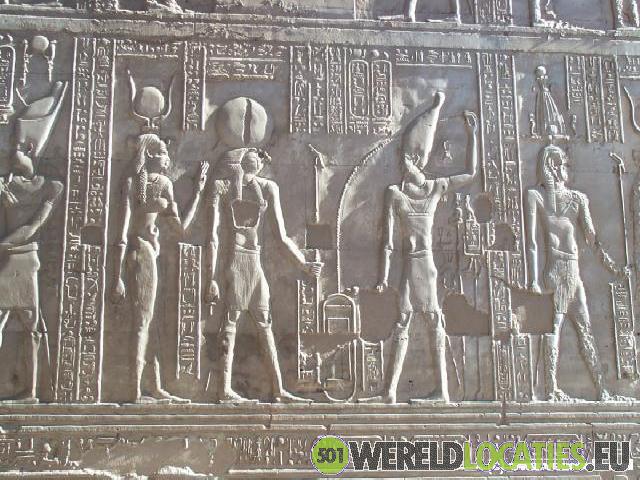
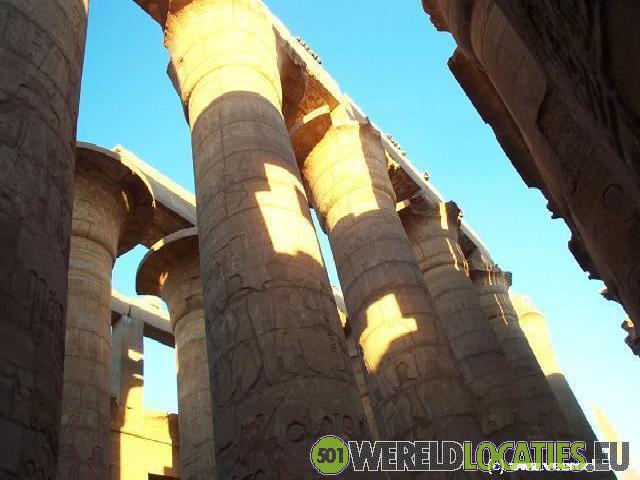
Egypt - At the end of the afternoon, we visit the temples of Karnak, about three kilometers from Luxor. With seven horse-drawn carriages, we travel in a procession to Karnak. In front of the temple, Mohammed gives a detailed explanation about the temple. Karnak is an immense complex of temples. The heart of the temple is formed by the temple of Amun. The inner courtyards, the colonnades, and the colossal statues — Karnak is overwhelming. No expense was spared. In total, 80,000 workers worked on the temple. The complex was buried under sand for 1,000 years and was excavated in the mid-19th century. Inside, Mohammed extensively tells about the colossal statues of Ramses II, the drawings and hieroglyphs on the walls, and their meanings. He also explains the construction of the temple. He continues until it turns out that the temple closes earlier today (at 5 pm instead of 6 pm). In the remaining ten minutes, Mohammed quickly shows the rest of Karnak, the Obelisk, and the sacred water. We are almost literally swept out of the temple. Outside, it has grown dark. We return to Luxor by horse and carriage. At the Luxor Temple, we get off. Here too, Mohammed gives an extensive explanation of the beautifully illuminated temple. The Luxor Temple, with its rows of columns, is one of the most impressive monuments from ancient Egypt. The complex lies right on the Nile River. The temple was built by Pharaoh Amenhotep III and later expanded by Ramses II. Alexander the Great also contributed to the temple later on. Due to neglect, part of the temple became integrated into the city. Houses were built in the temple. Now, only the Abu al-Haggag mosque remains in the temple complex. A 25-meter-high obelisk flanks the entrance to the temple. Originally, there was another obelisk, but it was gifted to France at the beginning of the 19th century. This obelisk now stands at Place de la Concorde.
Citadel of Cairo

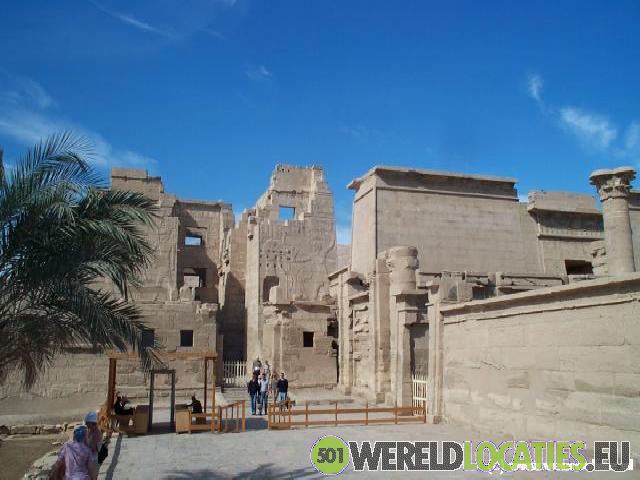
Egypt - The Citadel is also especially busy due to the Sugar Festival (Eid al-Fitr). While a line of over a hundred meters of Egyptians waits to enter the Citadel, we can enter through the special tourist entrance. The likely difference is that we pay, and they ...
Pyramids of Giza and the Sphinx

Egypt - Of course, I knew the pictures from history books — the pyramids of Giza: three stone structures whose construction still remains a mystery. The illustrations showed thousands of workers stacking stone upon stone. Beautiful, of course. But I will never ...
 The temples of Abu Simbel
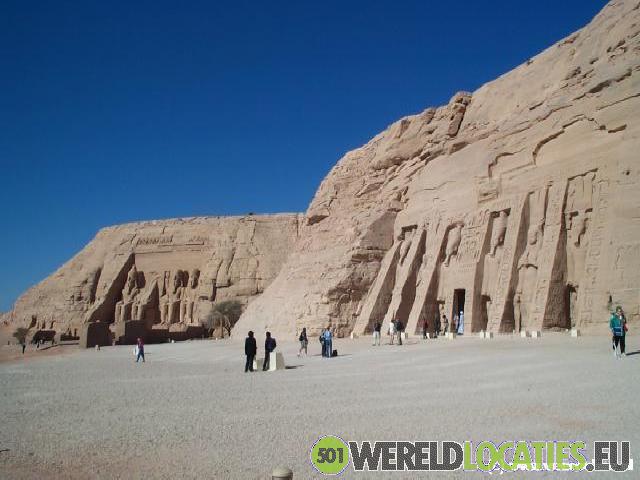
Egypt - The temple of Abu Simbel was carved out of rock by order of Ramses II. Originally, the temple stood 200 meters eastward. However, due to the construction of the High Dam near Aswan, nearly 300 kilometers away, the Abu Simbel temple would have been submerged ...
The Valley of the Kings in Luxor

Egypt - The Valley of the Kings is the burial site of the pharaohs from the period 1500 – 1000 BC. As it turns out, we are not the only tourists — it is incredibly crowded. For many day-trippers from Hurghada, this is one of the must-see attractions. From ...
The White Desert in Egypt
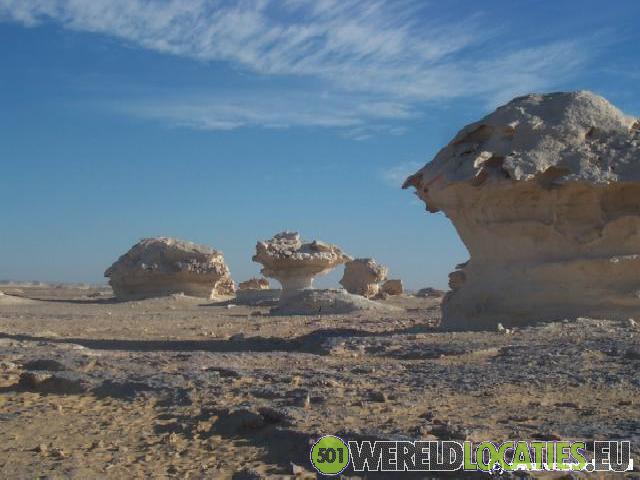
Egypt - At seven o’clock, accompanied by Ale, we board the bus. Ale is our guard for the coming days through the desert. A tough young guy of just 21, with a huge gun on his belt. It looks safe, but I estimate he will be gone when we really need him. In Egypt, ...