
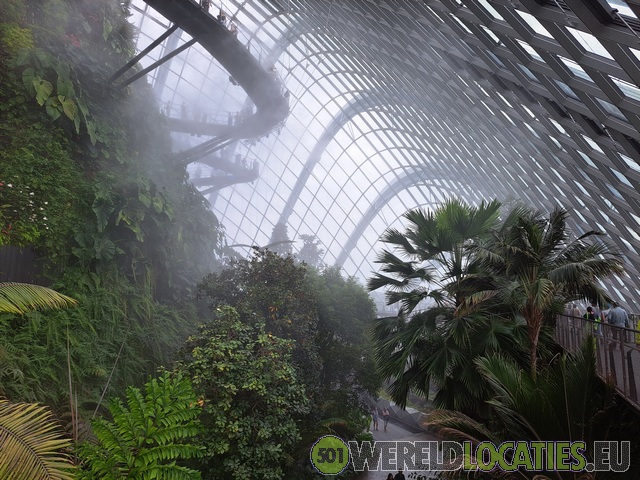


Foto: The Old Suspension Bridge from 1912 (bron: Ronald van der Veer)
Algeria - I had expected that today we would walk to the old center of Constantine, but the distance turns out to be too far. Instead, we drive by minibus to the Emir Abdelkader Mosque. After independence, this mosque was built in 1972 to accommodate about 20,000 worshippers. I take off my shoes and enter the prayer hall. The mosque is beautifully constructed. The dome is 64 meters high, Nehla tells us. Sunlight shines through the stained glass, casting colorful shadows on the carpet. Next to the mosque is the Qur’an school, where believers practice their prayers. After visiting the mosque, we continue to the Cirta Museum. Here we find remarkable mosaics from ancient Constantine, as well as many archaeological discoveries. The city of Constantine was founded as early as 600 BC under the name Cirta. Originally, it was a Numidian settlement. Thanks to its strategic location on a steep rocky outcrop, the settlement grew into an important center of the Kingdom of Numidia. In the fifth century, the Roman ruler Constantine the Great conquered the city and renamed it after himself. Using a scale model of Constantine, Nehla shows how the deep Rhumel Gorge runs alongside the city. Several bridges span the gorge. The 168-meter-long Sidi M’Cid Bridge from 1912 was for a long time the highest bridge in the world. Because of its bridges over the deep gorge, Constantine is known as “The City of Hanging Bridges.” After the museum, we order coffee in a coffeehouse. Only men sit in the café. The choice of coffee is limited: strong coffee, with or without sugar. Since I normally drink my coffee with milk, I don’t particularly enjoy this strong brew. The cake we order tastes better. We then drive to the lower part of the gorge. When I get out, I see the Sidi M’Cid Bridge high above me. Below, water from the gorge drops down as a waterfall. In earlier times, inhabitants of the old city used tunnels carved into the rock as escape routes during attacks. These tunnels opened into the gorge. We pass several of these entrances as we follow the river upstream. Part of the path runs through the rocks—remarkable considering how people managed to carve this without dynamite. The view of the gorge, the fast-flowing river, and the bridges is magnificent. On top of the cliffs stands the war memorial, the Monument aux Morts. This is our next destination. From there, we will continue our day on foot. The driver will pick us up again at the end of the afternoon. At the monument, we strike up a conversation with two Algerian boys—one from Algiers, the other from Biskra, the town we will travel to tomorrow. I am surprised that they have never visited Constantine before. From the monument, we walk across the Sidi M’Cid Bridge. The bridge rises no less than 175 meters above the gorge. On the other side begins the Kasbah, a network of narrow, lively streets. In the middle of it lies the Ahmed Bey Palace. The Ahmed Bey Palace in Constantine is one of the finest examples of 19th-century Ottoman-Algerian architecture. It was built between 1826 and 1835 by order of Ahmed Bey, the last Beylik ruler of eastern Algeria. The palace consists of three large courtyards surrounded by colonnaded galleries with vaulted arches. The walls are decorated with tile mosaics, wood carvings, and paintings. Ahmed Bey did not enjoy the palace for long: in 1837, the French conquered the city. The palace is now being restored to preserve it for the future. We have grown hungry. In a nearby restaurant, we order soup with a rolled and fried bread filled with potato. It tastes excellent. Close to the restaurant is a suspension bridge over the gorge. We cross the gorge and walk back via the original access bridge. Since Roman times, this bridge served as the city’s main entrance. However, it was destroyed during the French invasion in 1837.


Roman Ruins of Djemila

Algeria - The ancient Roman city of Djémila, originally named Cuicul, was founded in the first century AD. It was initially populated by former soldiers from the Third Legion of Augustus and grew into an important regional economic hub. The city's prosperity was ...
Tassili NAjjer National Park
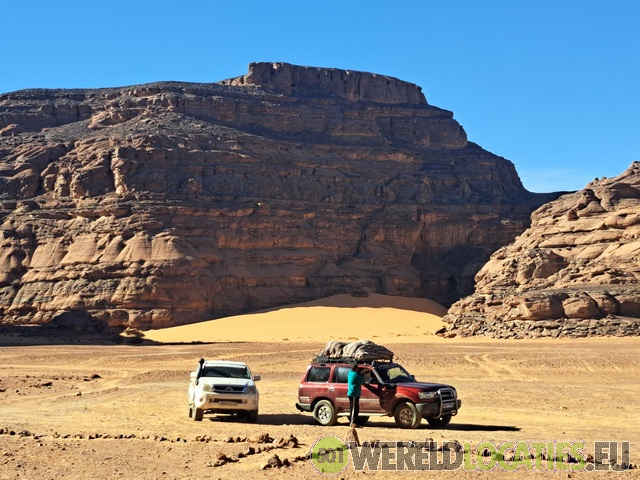
Algeria - At ten o’clock, we meet the crew for the coming days: a guide, a cook, and two drivers. The luggage goes into one vehicle, while the supplies are loaded in the back of a pickup truck. We divide ourselves between the two cars and drive out of Djamet. ...
The Cities in the MZab Valley

Algeria - Ghardaïa is a Berber oasis town and forms the heart of the M’Zab Valley. The fortified sister towns of Melika, Beni Isguen, Bounoura, and El Atteuf are also located here. We first visit the oldest of the five towns: El Atteuf, founded in 1012. Over ...
The Kasbah of Algiers

Algeria - In the seventeenth century, the Spaniards attacked Algiers. The Algerians called for help from the Ottomans. This led to present-day Algeria becoming part of the vast Ottoman Empire, although the country retained a special status. The Beys became the ...
The Roman City of Tipaza
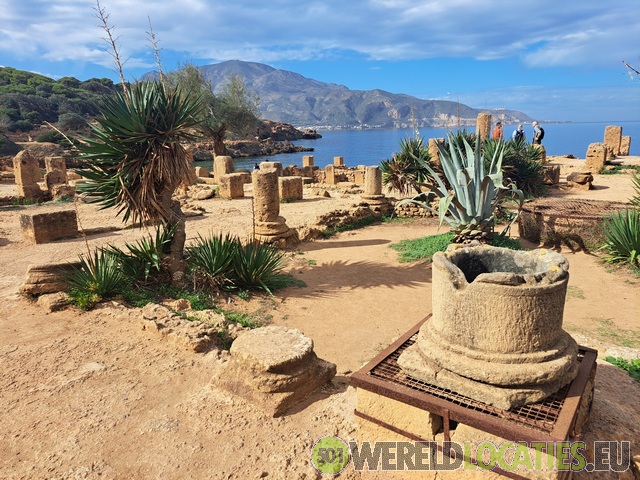
Algeria - A little later, Leila comes walking toward us. She guides us to the two Roman cities. Leila explains that we will first drive to Cherchell, the farthest city from Algiers. During the French colonization, many historic Roman buildings were demolished and ...
Timgad the Pompeii of Africa

Algeria - Just after midday, we arrive in Timgad. Timgad is a large Roman archaeological site and the best-preserved Roman city in this region. Because part of the remains ended up buried under a thick layer of desert sand, the city is often referred to as the ...