

Foto: The underground cathedral in the salt mines (bron: Ronald van der Veer)
Poland - Before heading to Kraków, we first visit the Wieliczka salt mines. The salt mine complex is located just past Kraków. Since we had already booked tickets in advance for the English-language tour, we don’t have to queue at the ticket counter. We are directed to a separate window. Our tour starts at four o’clock. We’re early, so we still have plenty of time to get something to eat. At a restaurant, we order beetroot soup with a croquette—probably a local combination. At exactly four o’clock, Svetlana welcomes us. She guides us through the mine. The mine shafts go down to a depth of three hundred meters, but the tourist route doesn’t go deeper than 140 meters. First, we descend to level one, using the stairs. More than fifty times, we go down a small flight of seven steps. It seems endless. Looking down between the railings, the staircase appears to go on forever. At a depth of 65 meters underground, Svetlana begins showing us the salt mines. She points out the blocks of salt that were carved from the rock, the wooden hoisting constructions, and various salt sculptures arranged in different scenes. We descend further via stairs to levels two and three, eventually reaching a depth of 140 meters. The temperature is a pleasant 14 degrees Celsius. Normally, during summer, people are advised to wear warm clothes, but today it feels more comfortable than outside. The highlight of the tour is the ‘Salt Cathedral’—a vast hall carved out like a church. Stunning! All the statues, the altar, and the stairs are sculpted from salt. After nearly two hours, the tour comes to an end. Svetlana asks if anyone is interested in visiting the museum. We had read about it in the guidebook. Strangely, besides us, only two others are interested. This isn’t a problem for Svetlana. She leads the others to the lift and takes us to the museum. She gives explanations about the exhibited tools, the colorful minerals, and we pass through halls filled with large wooden hoisting structures. We wouldn’t have wanted to miss this extra tour. This part also ends at the lift—a cramped and somewhat outdated elevator for nine people. With a bit of squeezing, everyone fits. The lift safely ascends through the old mine shaft.


 Auschwitz Concentration Camp

Poland - The city of Kraków is closely connected to World War II history. About sixty kilometers from Kraków was the largest Nazi extermination camp: Auschwitz. At nine o'clock, we drive out of Kraków and head toward Oświęcim, the current Polish name for ...
Kraków City Center

Poland - Today we explore the old center of the city. We begin our walking tour in the old Jewish quarter, as our hotel is located here. Right on the corner of the street stands the first Jewish temple. Already in the 19th century, the Jewish population concentrated ...
Malbork Castle

Poland - Outside it's cloudy as we open the curtains. It rained last night. When we load the luggage into the car, it's still lightly drizzling. We drive out of Gdansk on our way to Warsaw. About fifty kilometers southeast of Gdansk lies Malbork Castle. This medieval ...
Old town of Gdask

Poland - We start the day slowly. After having coffee in the hotel room, we walk to the Motlawa River quay for breakfast. The weather is beautiful. The sun is shining and it’s about five degrees outside. In a small café, we order breakfast with cappuccino, ...
The beautiful churches of Pozna
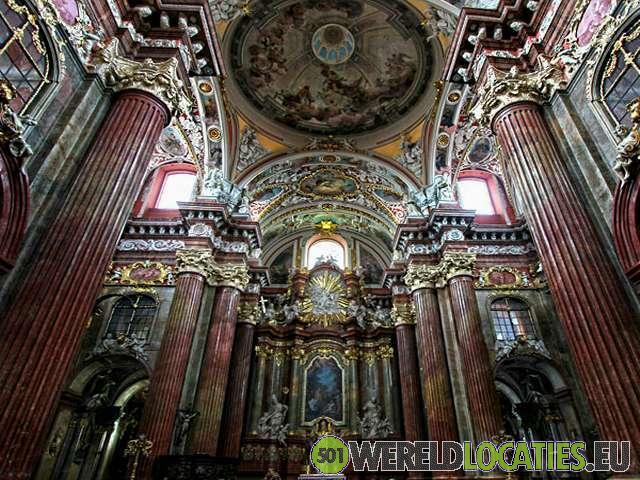
Poland - Upon entering Poznan, the streets are busy. The evening rush hour starts early here. The hotel is located right next to the old town, but unfortunately, the road leading there is closed due to construction. We take a right turn at random. The navigation ...
The old town of Warsaw

Poland - Today we explore the city of Warsaw. Right next to the hotel stands the Staszic Palace, with the statue of Copernicus on the square in front of it. We cross over to Piłsudski Square, the largest square in the city. At the edge of the square, next to ...