


 Lithuania - Hill of Crosses in Siauliai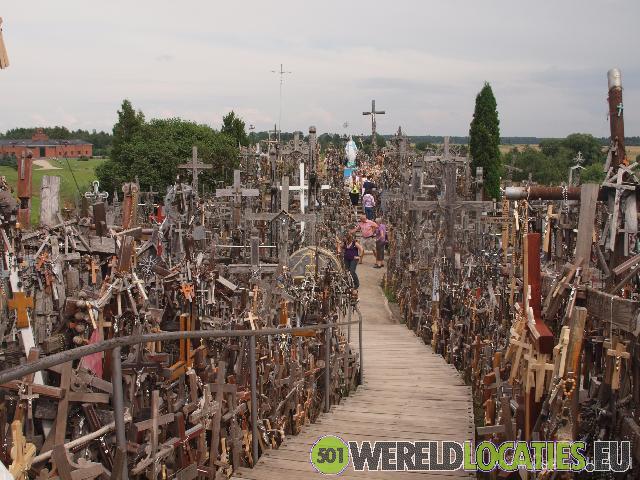


Foto: The gateway to the fortress (bron: Ronald van der Veer)
Serbia - The Kalemegdan Fortress, also known as the Belgrade Fortress, is a historic fort and park complex situated at the confluence of the Danube and Sava rivers. Located on a rocky hill in the center of Belgrade, it is one of the city’s oldest and most significant landmarks. Kalemegdan is not only a military monument but also a symbol of Belgrade’s long, complex, and often violent history. Its origins date back to the 3rd century BCE when the Celts built a fortified settlement here. The Romans later established the castrum of Singidunum, a border fort of the Roman Empire. Over the centuries, the fortress was repeatedly destroyed and rebuilt, especially during Byzantine, Hungarian, Ottoman, and Habsburg rule. Each ruler left their mark, making the fortress a unique architectural and historical mosaic. The current appearance of Kalemegdan mostly dates from the 18th century, when it was modernized under Austrian rule. The massive bastions, gates, and underground passages reflect military engineering from various eras. Notable features include the Donjon, a medieval watchtower; the imposing Zindan Gate; and the Victor Monument, a 14-meter-tall statue erected in 1928 to commemorate Serbian victories in the Balkan Wars and World War I. The surrounding Kalemegdan Park was laid out in the 19th century as a city park and is now a favorite place for both locals and tourists. It features walking paths, fountains, artworks, and panoramic views over the river and the city. The park also hosts several museums, such as the Military Museum, which displays a vast collection of weapons, uniforms, and war memorabilia from Serbian history. The Natural History Museum and a zoo are also located within the complex. Kalemegdan is steeped in history, but it also lives in the present. Festivals, concerts, and cultural events are regularly held here. Visitors can explore underground tunnels and casemates, view old cannons, or simply enjoy the sunset from the fortress walls. Especially in the evening, the view over the rivers is spectacular.


The Cathedral of Saint Sava

Serbia - The Church of Saint Sava in Belgrade, also known as the Temple of Saint Sava, is one of the largest and most impressive Orthodox churches in the world. Located on the Vračar plateau in the heart of Serbia’s capital, the building dominates Belgrade’s ...
The Resava Caves

Serbia - With a total length of about 4.5 kilometers, of which over 800 meters are accessible to the public, the Resava Cave offers a spectacular underground world full of stalactite formations, crystal structures, and subterranean halls and galleries. During ...
The walled Manasija Monastery

Serbia - The Manasija Monastery, also known as the Resava Monastery, is one of the most important medieval monuments in Serbia. It is situated in a picturesque valley near the town of Despotovac, surrounded by forested hills in the heart of Central Serbia. The ...