

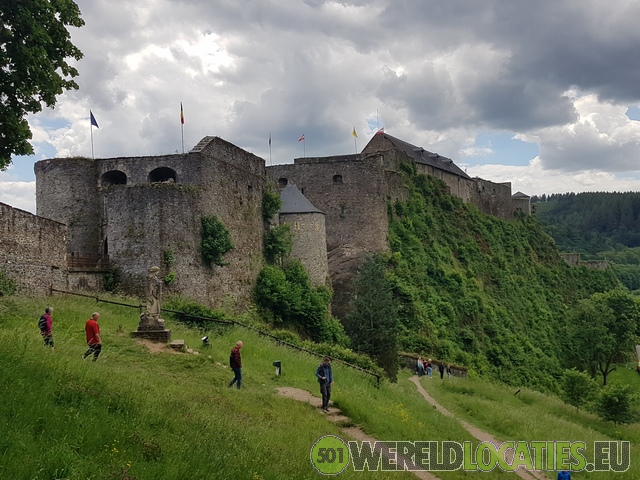


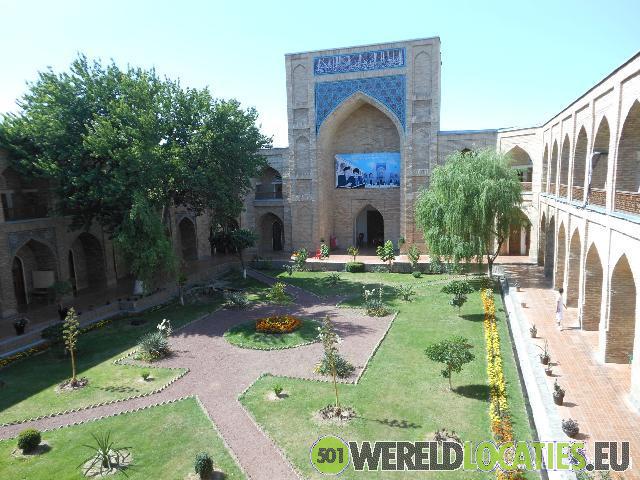
Foto: The central square of Bukhara (bron: Ronald van der Veer)
Uzbekistan - Bukhara is best explored simply by walking around. The old city center is relatively small. Many of the squares around the bazaar are surrounded by old madrassas (Qur'anic schools). Some are still in use, others have been taken over by tourist vendors. From my hotel, I walk to the square and enter an old madrassa. It has been fully restored. As soon as I step inside, carpet sellers approach me. A bit of a shame—I’m more interested in the architecture of the building itself. I pass through the covered bazaar filled with stalls and shops and arrive at a traditional teahouse. I order tea, which is served with a large plate of sweets. Opposite the teahouse lies an old bathhouse. I step inside. After hours, it’s open for tourists to bathe and get massages. I’d rather bathe among the locals, so I make an appointment for a bath and massage later in the afternoon. Prices here are definitely tourist-oriented. What I notice—both here and elsewhere in Bukhara—is that there are two sets of prices: one for locals and one for tourists. Local people pay nothing at all to enter mosques and madrassas. The two madrassas to the right of the bazaar are freely accessible. They stand directly opposite each other. When I enter through the main gate, vendors look at me hopefully. I’m particularly interested in the unique prayer room. Amid the carpets, I find this special room just to the right of the entrance gate. At Bukhara’s central square, I approach the tall minaret. Friends in the Netherlands gave me some photos of people taken here. When I stand in front of one of the stalls, I immediately recognize the vendor from the photo. She’s stunned when I show it to her. Everyone gathers around to look. As a thank-you, she hands me a small bottle of water. I buy a cola as well. Of course, we take a new photo together—maybe for future travelers to Uzbekistan. The second photo is of a grocer across the square. When I show it to a few men, they immediately point me further down the street. A little boy walks ahead of me to the right shop. The vendor bursts into laughter when he sees the photo. It’s his brother, along with the cleaning lady. His brother isn’t there now but could arrive any moment. The photo is passed around among the people sitting on the veranda in front of the shop. “There he is,” says the brother. I show the photo to the surprised young man. Everyone laughs. He remarks that it was clearly colder then, based on his jacket and cap. I leave the photo with them and shake both brothers’ hands.
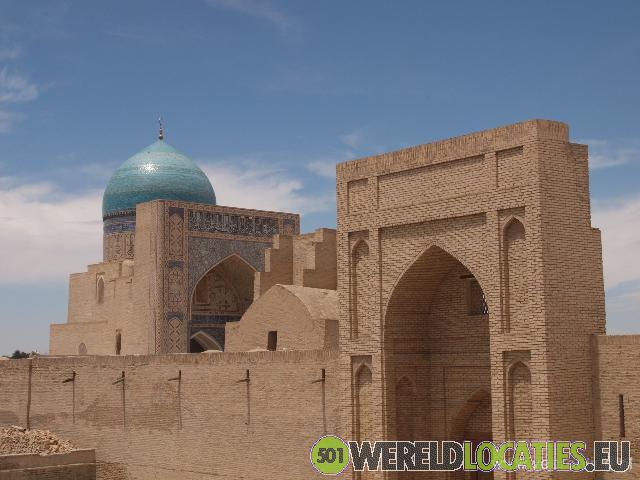
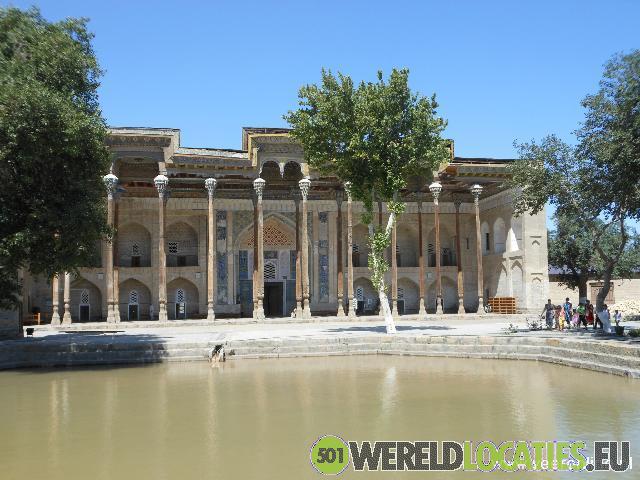
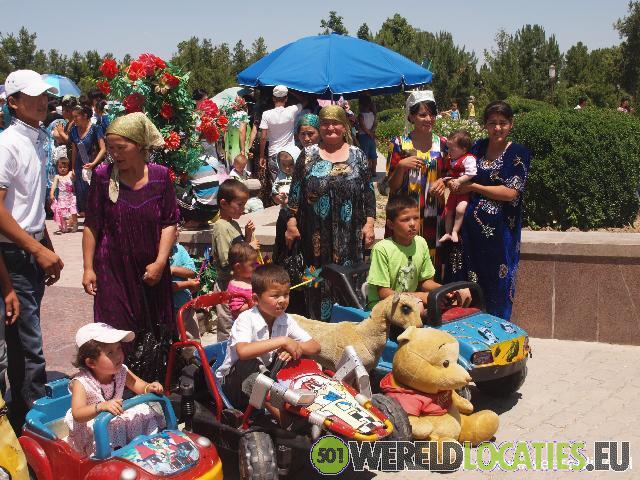
Chorsu Bazaar in old Tashkent
Uzbekistan - I take a taxi to the Plov Center. Plov (or pilaf) is the national dish of Uzbekistan — a one-pot meal with rice and lamb. Uzbeks come to the Plov Center to eat plov for lunch. I sit down at a table and order a plate of plov. Then I continue to the old ...
Enchanting Khiva

Uzbekistan - The old town of Khiva is enclosed by a 10-meter-high mudbrick city wall. As I enter through the west gate, souvenir vendors are already lining up to sell me all kinds of items. Unfortunately for them, I’m not buying. I head for the 12th-century palace ...
 Samarkand Registan Square

Uzbekistan - When I arrive at Registan Square, it’s already busy with tourists. I walk onto the square. Immediately, a guard approaches me. “Ticket, ticket!” he says. I look around in surprise. Apparently, tourists need a ticket just to walk onto the square. ...
The ruins of Timurs palace

Uzbekistan - Shahr-i Sabz – a city in Uzbekistan, Central Asia – was intended by Timur to become his capital in the 14th century. The town or village forms a rectangular enclosure surrounded by a wall about 4 km in circumference and up to 5 meters thick in places. ...